
Pick one. We email you the link.
Start here
Where you stand, before any technical detailCore risk
The two surfaces most systems get wrongAdvanced
For teams already connecting tools, agents and sensitive dataFifteen to twenty questions about how your system is built and used. No jargon to decode, and "I’m not sure" is a valid answer that still counts.
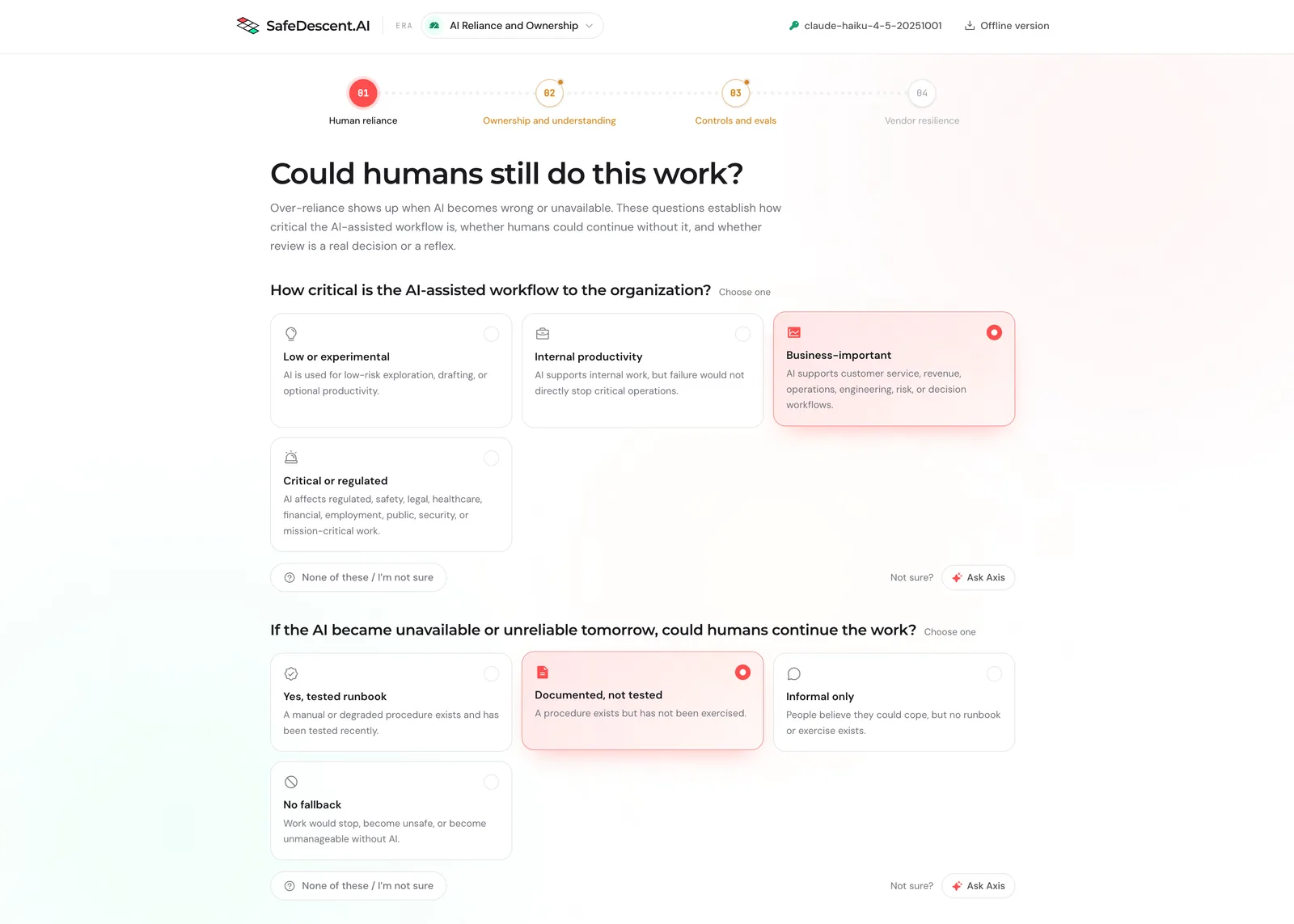
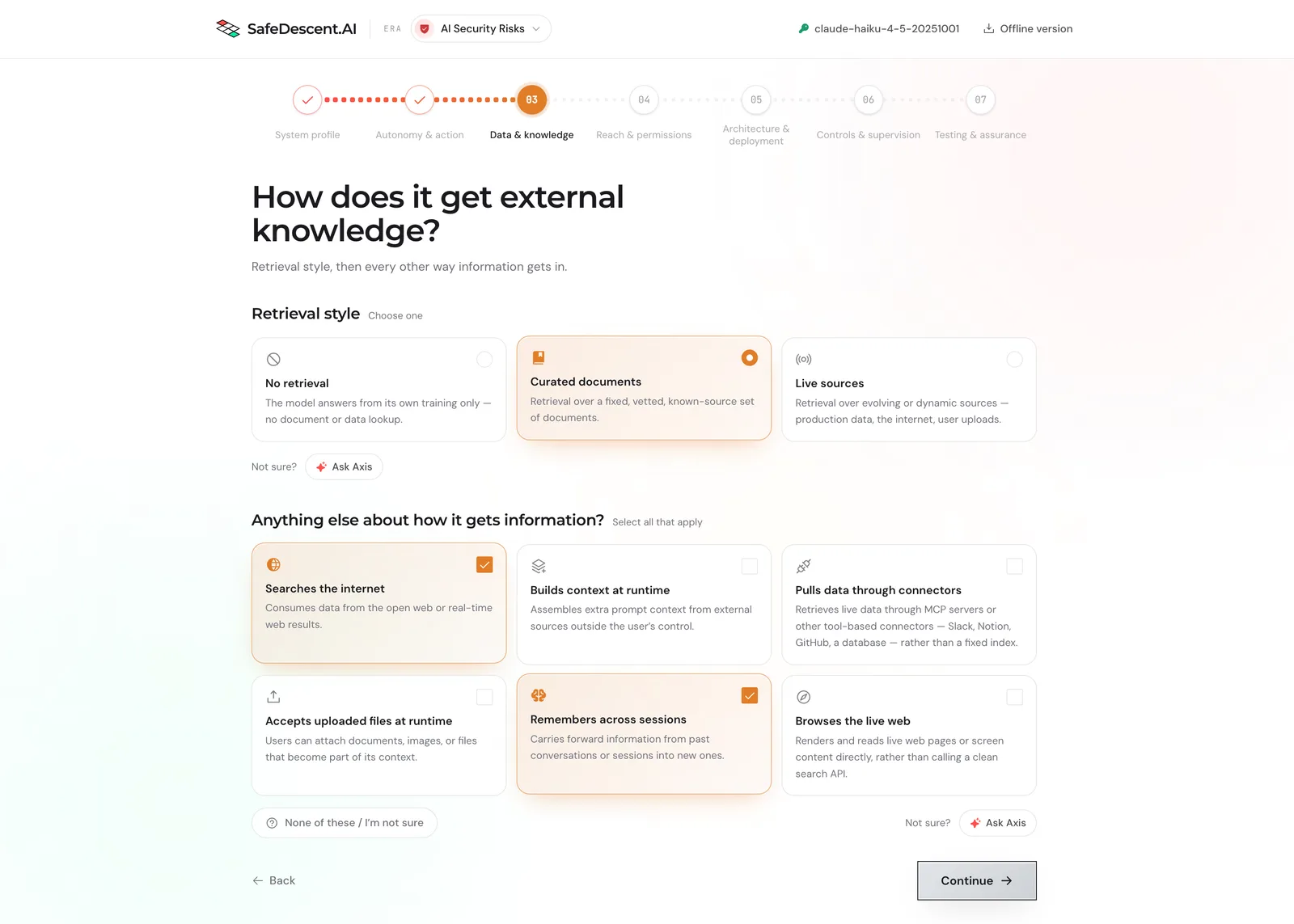
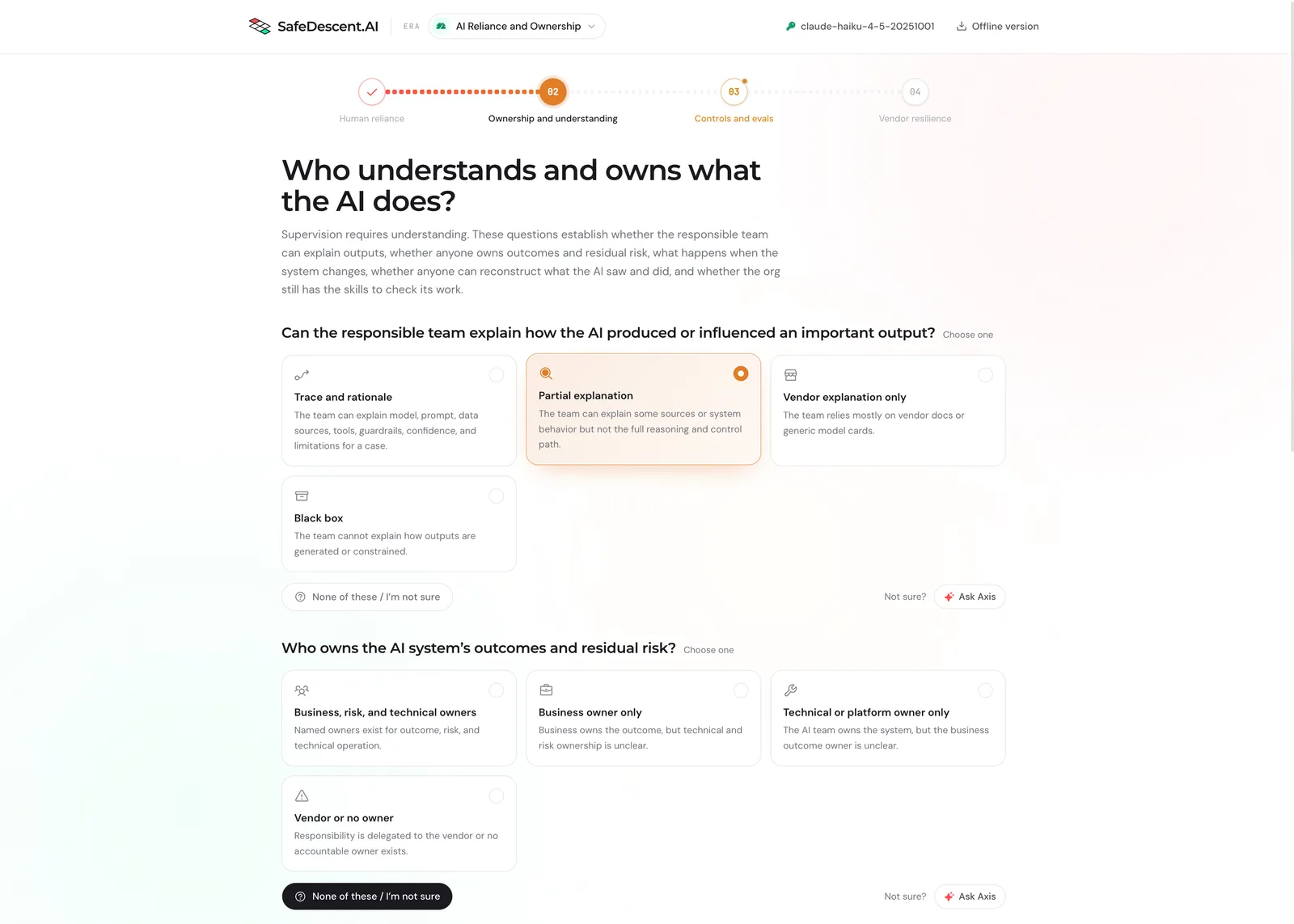
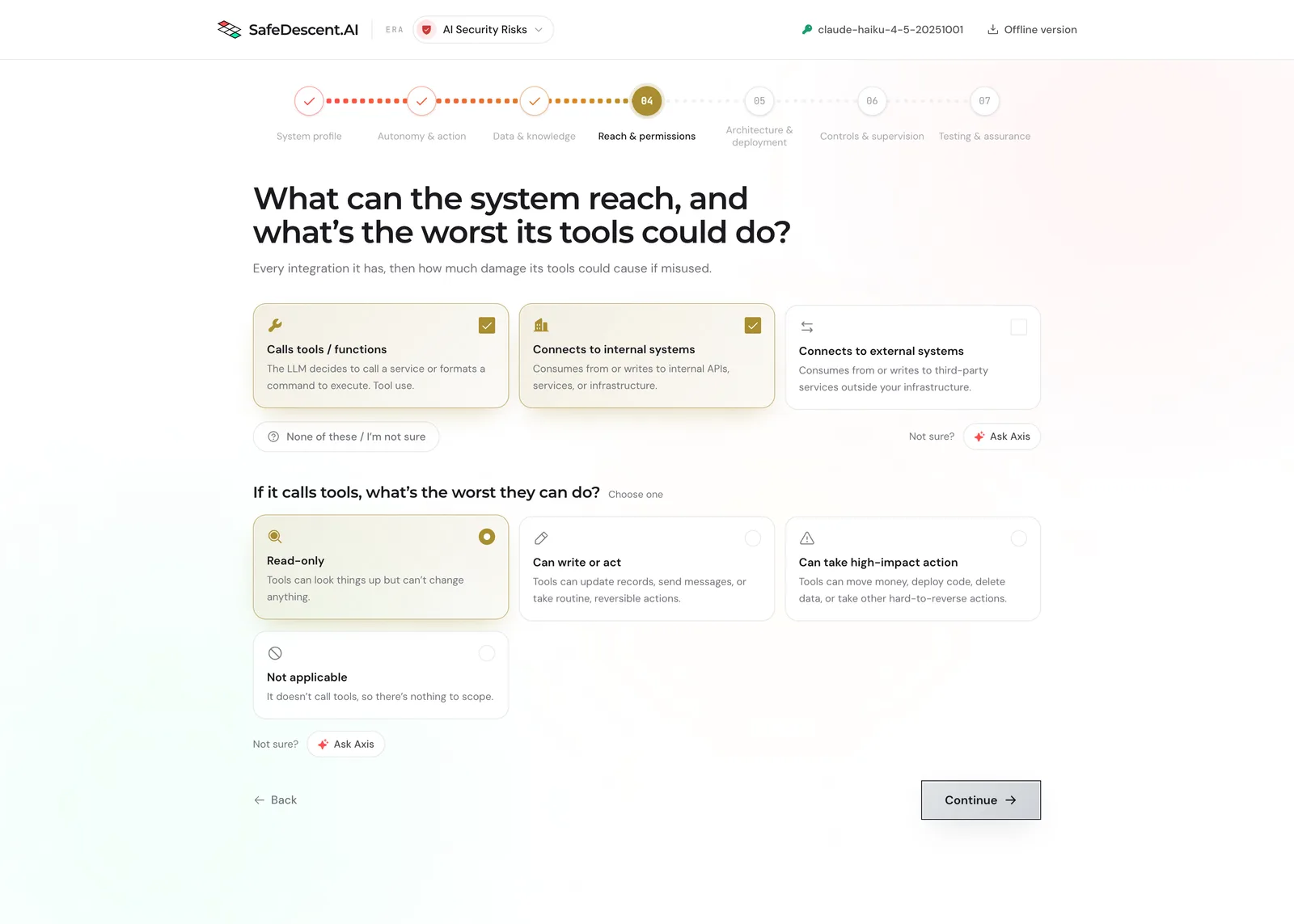
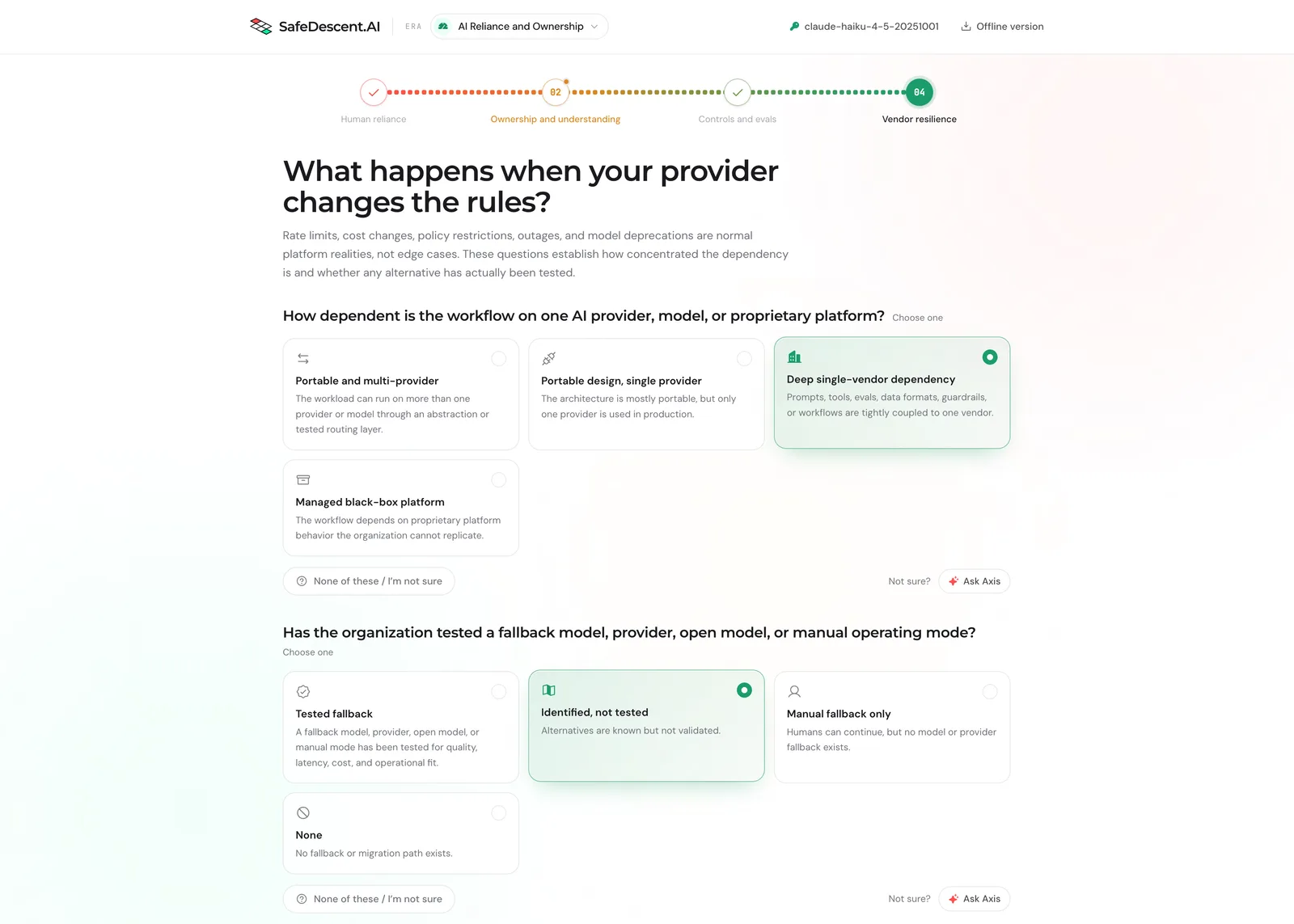
A classification, the specific risks to check, and what to do about each. Not a score for a slide: a list your team can start working through tomorrow.
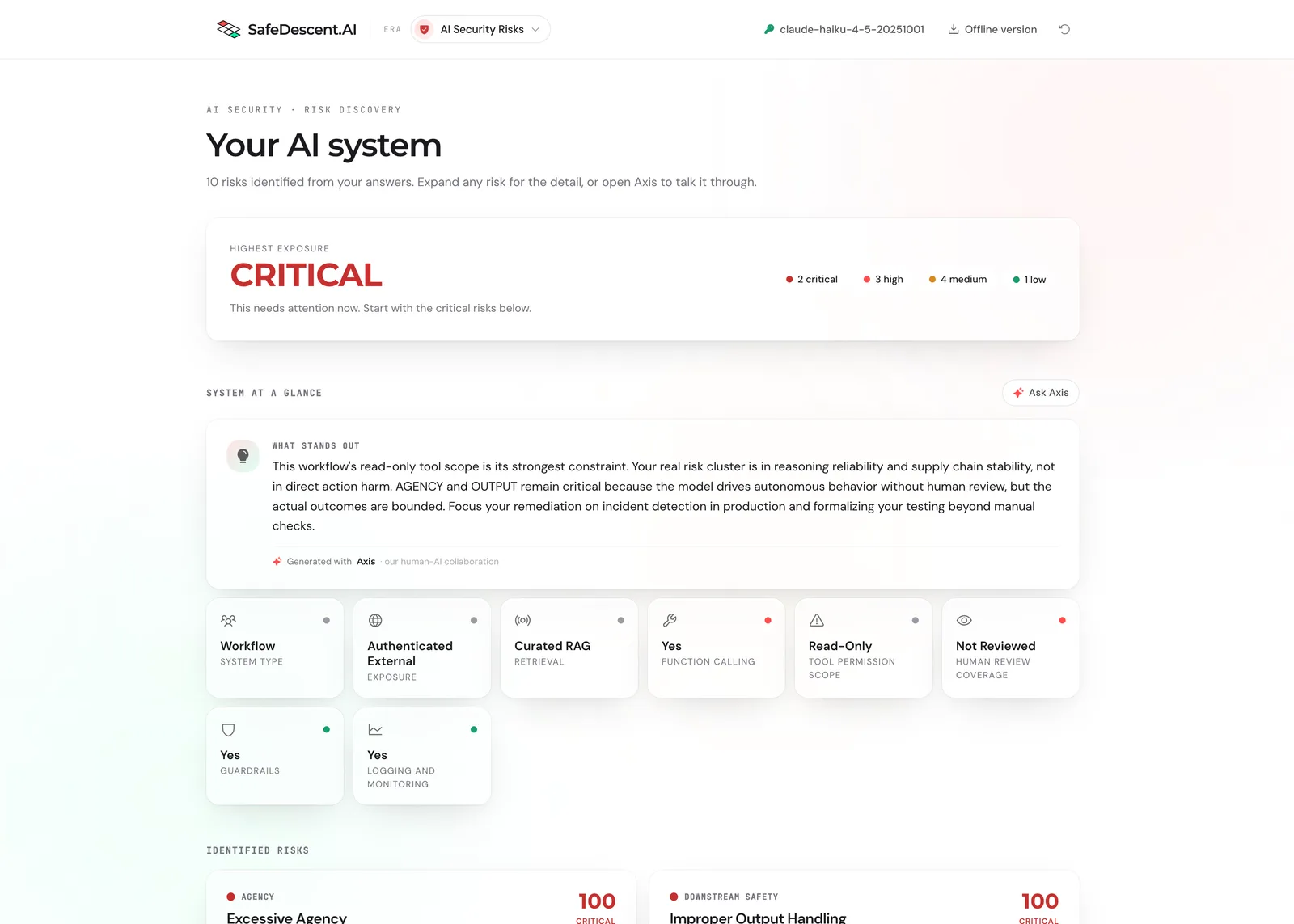
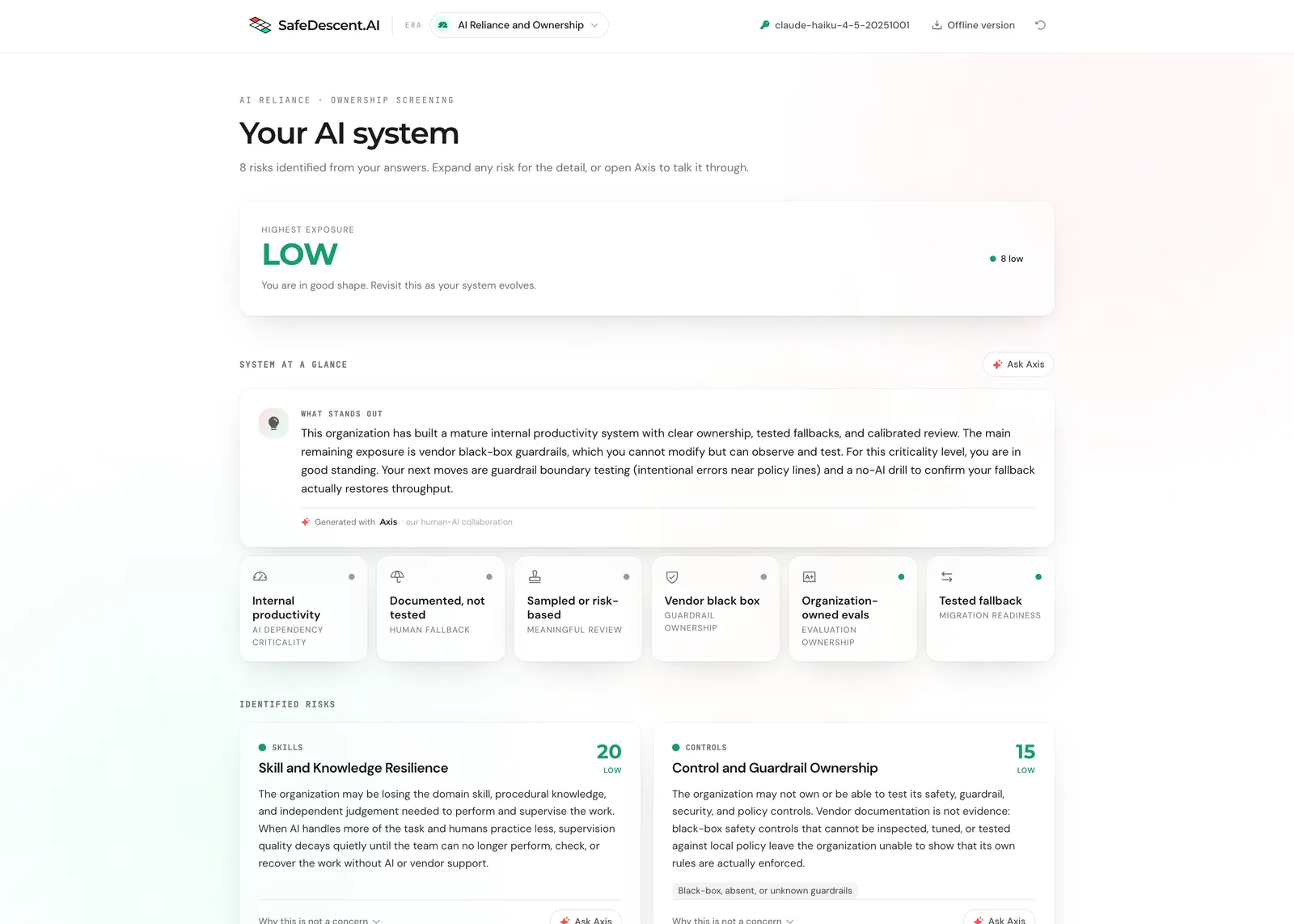
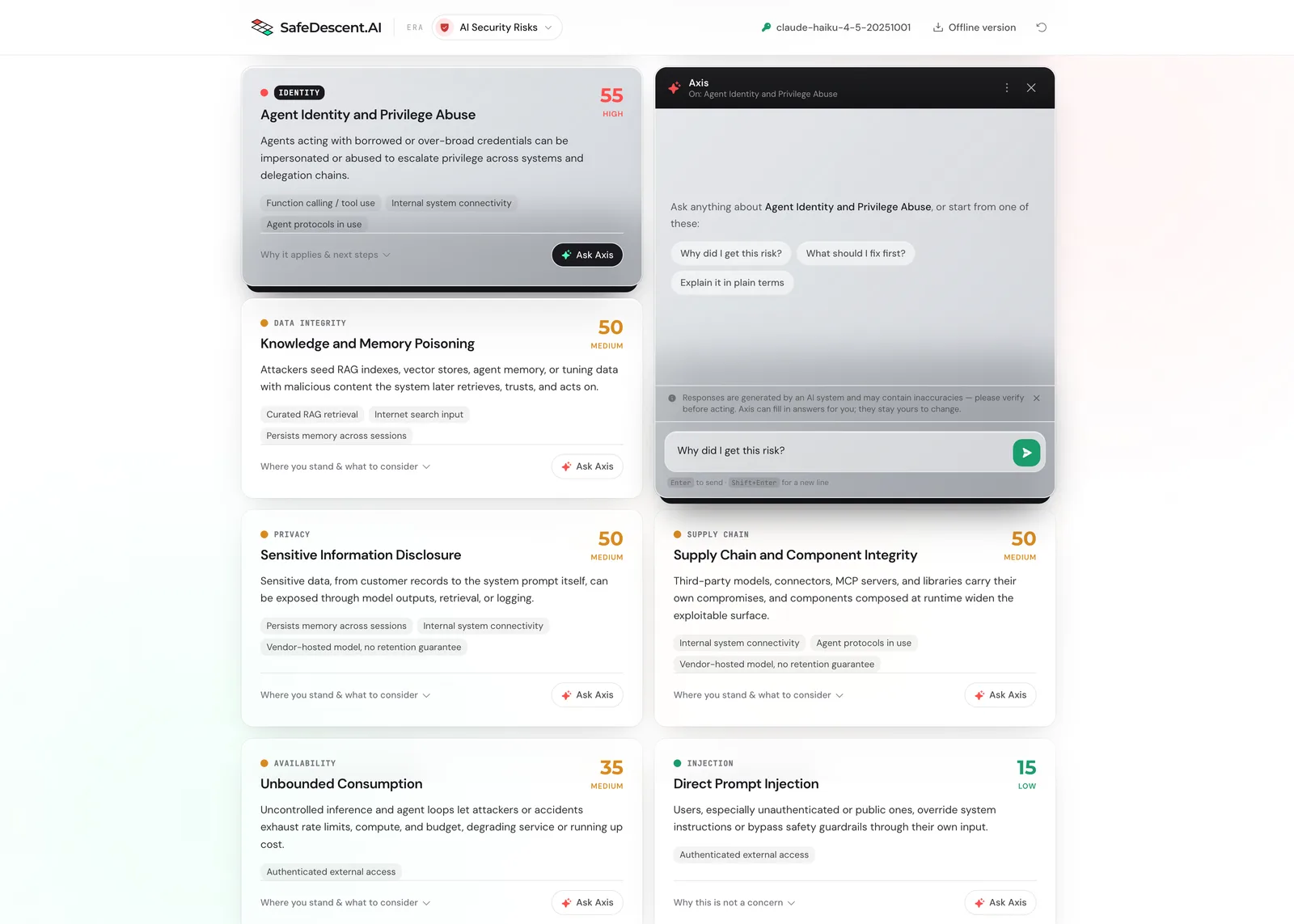
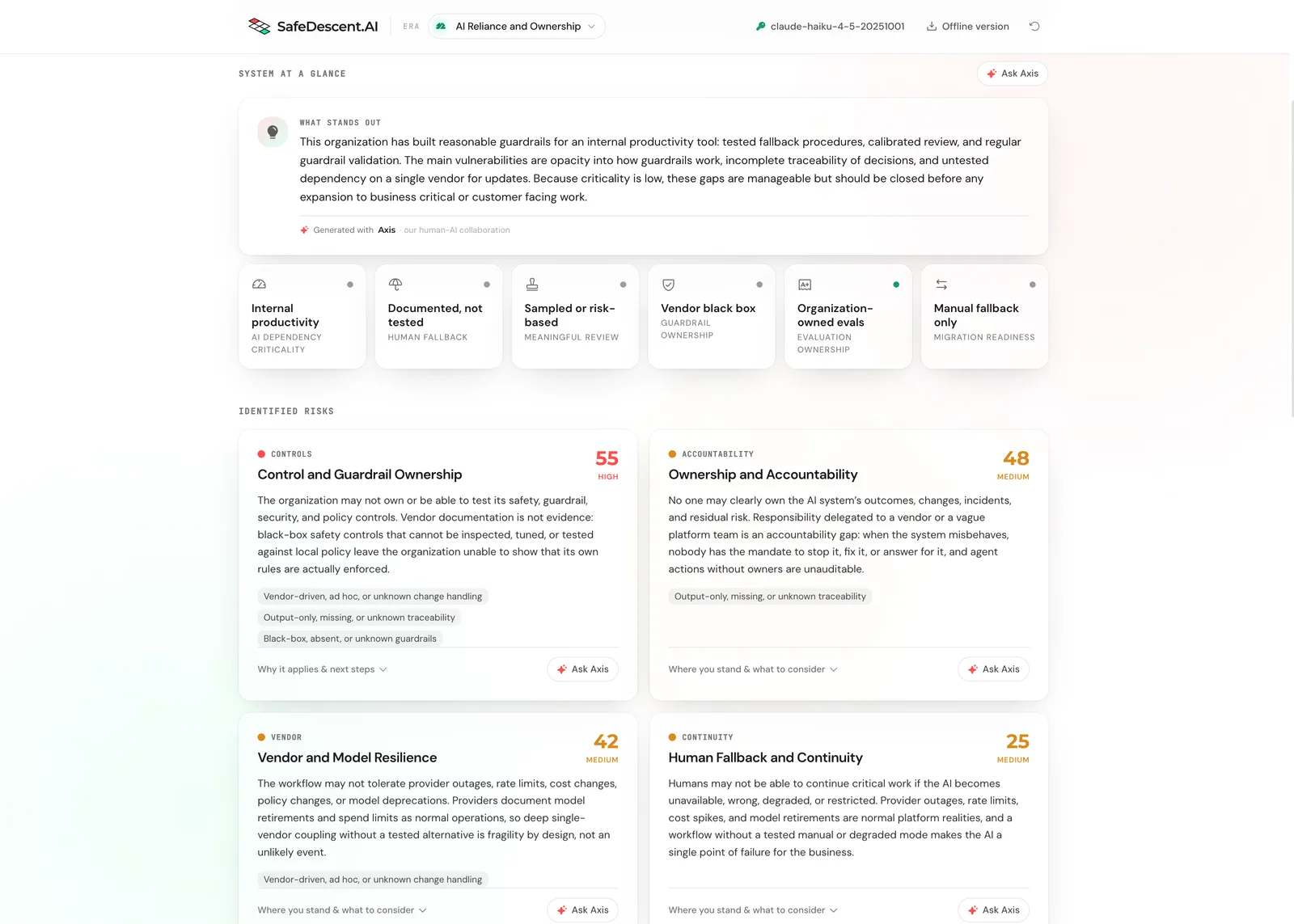
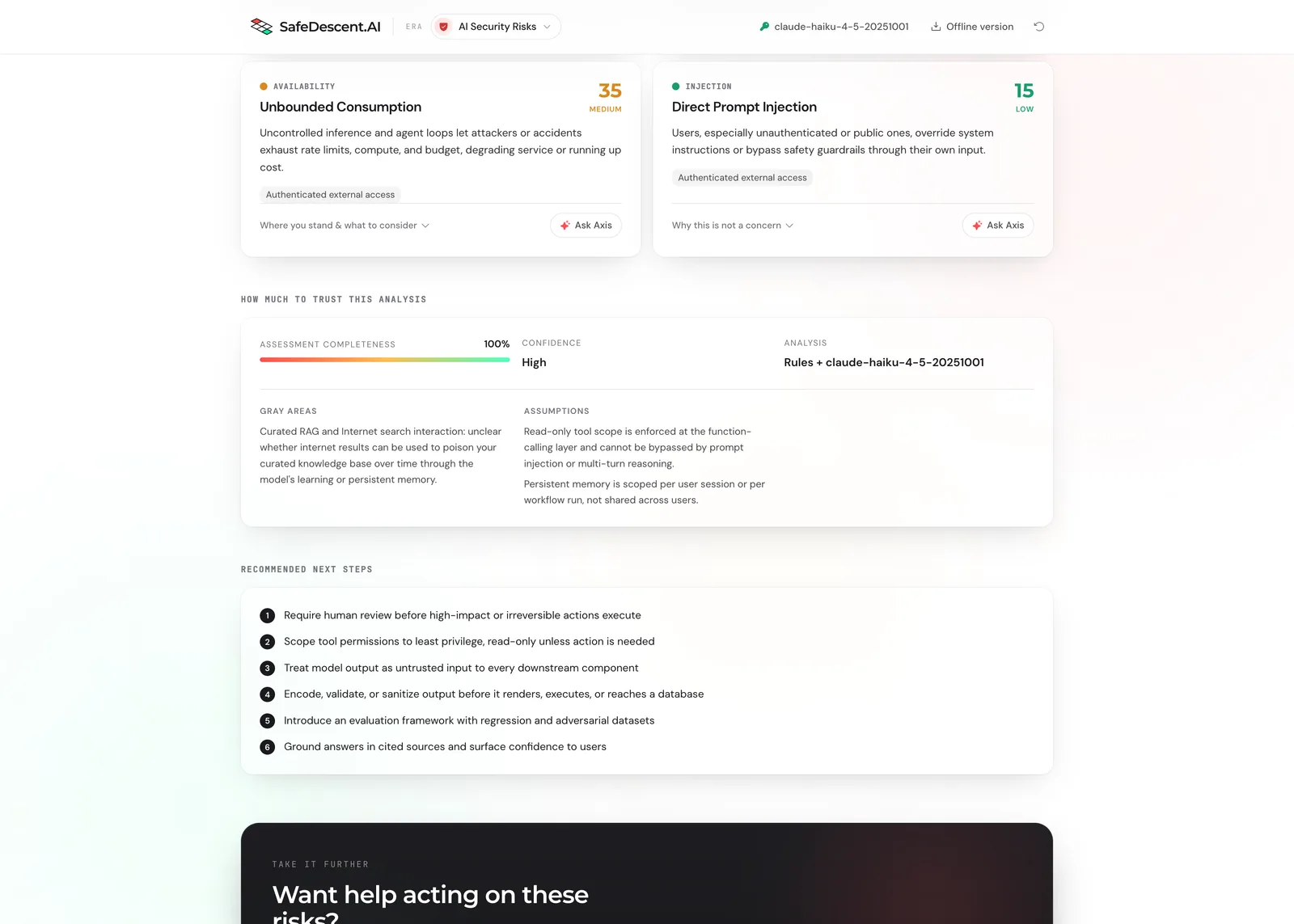
We email you the assessment. You run it whenever you have twenty minutes.
The assessment opens in ERA and runs in your browser. Your answers stay there. If the result raises questions, reply to the email and we will look at it with you.
Where they come from. Years of delivering AI security and risk assessments in different organizations kept showing us the same thing: with the right questions you can reason to good probabilities about a system and its risks without asking very many of them. These assessments recreate that style of approximation.
As an expert I was constantly asked to quickly assess a system or help a team understand one, and I realized that within 15 or 20 minutes I usually had a really good approximation of its AI risks. ERA is an attempt to recreate those 20 minutes for anyone.
How they work. A deterministic engine computes your risk scores and actions. An LLM refines the results and the wording on top, but they always stay within the bounds the engine sets. Every assessment runs through an evaluation pipeline, where prompts and models are tested too. You can also bring your own LLM and run everything in your browser, so your data is shared only if you choose to share it with our experts.
What comes after. An assessment is a starting point, and the important step after it is validation by a human expert. Your answers, provenance, and logs can be shared with us as a conversation starter, which moves you past initial discovery and straight into work on mitigations.